
AEDs
AED FAQ
What is public access defibrillation?
Public access defibrillation (PAD) means providing access to AEDs in public and/or private places. A copy of the University PAD Program Policy is located on the EHS website.
What is an AED?
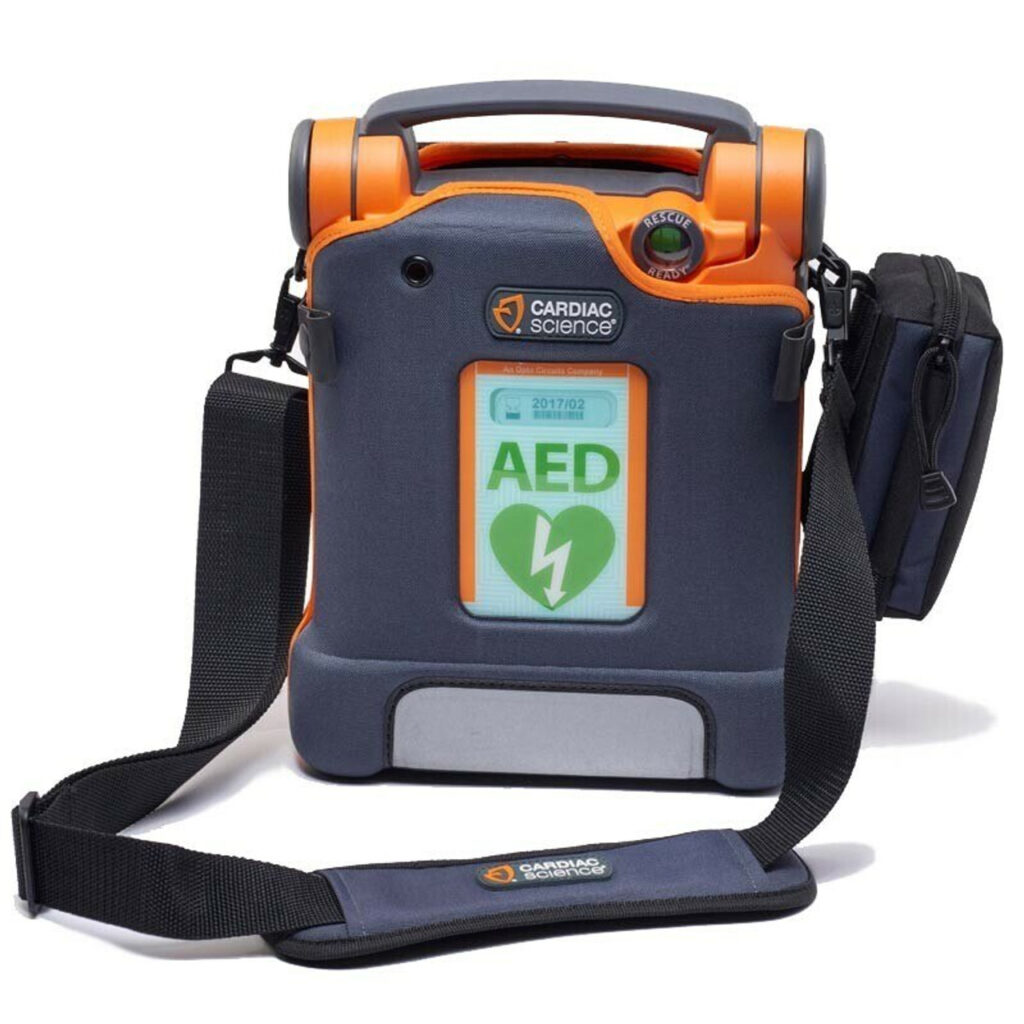
The automated external defibrillator (AED) is an electronic medical device. An AED can check a person’s heart rhythm. It can recognize a rhythm that requires a shock. It can then advise the rescuer when a shock is needed. The AED uses voice prompts, lights, and text messages to tell the rescuer the steps to take.
AEDs are very accurate and easy to use. Anyone can operate an AED safely. There are many different brands of AEDs, but the same basic steps apply to all of them.
Liability and Good Samaritan Laws
North Carolina law allows for the use of an AED during an emergency for the purpose of attempting to save the life of another person who is, or who appears to be, in cardiac arrest. Accordingly, North Carolina law also expressly provides immunity from civil liability for those who obtain and maintain AEDs, and those who use such devices to attempt to save a life. Specifically, North Carolina General Statute Section 90-21.15, provides for two classes of persons or entities who are exempt from civil liability related to the procurement and maintenance of AEDs:
- The person or entity that provides the cardiopulmonary resuscitation and AED training to a person using an AED.
- The person or entity responsible for the site where the AED is located when the unit has provided for a program of training.
Thus, if the University acquires and maintains an AED, the University is exempt from civil liability related to the use of the device to save a life. In addition, North Carolina General Statute Section 90-21.14 provides that the person who uses an AED to attempt to save or to save a life shall be immune from civil liability unless the person was grossly negligent or intentionally engaged in wrongdoing when rendering the treatment.
What should I do if I see someone using an AED?
If someone is using an AED, call 911 to report a medical emergency. If you are trained, tell the person using the AED that you can assist, if necessary.
What do I do if hear an AED cabinet beeping/chirping?
If you hear a cabinet beeping/chirping anywhere on campus or at any off-campus WFU-owned property, contact Bridget Marrs in Environmental Health, and Safety at or F&CS Customer Service (HALL) at 336-758-4255.
If AEDs are so easy to use, why receive formal training in AED/CPR?
An AED operator must know how to recognize the signs of sudden cardiac arrest, when to activate the EMS system, and how to perform CPR. Training will allow the operator to become familiar with the device. The more familiar a person is with the device, the higher the likelihood they will use it. Training also teaches the operator how to avoid potentially hazardous situations.
Early CPR is an integral part of providing lifesaving aid to people suffering sudden cardiac arrest. CPR helps to circulate oxygen-rich blood to the heart and brain. After the AED is attached and delivers a shock, the typical AED will prompt the operator to continue CPR while the device continues to analyze the victim. CPR/AED training is available to all WFU faculty/staff/students.
Where are AEDs located at WFU?
This link shows all locations of AEDs on Reynolda Campus and associated WFU properties in Winston-Salem.
How can I enroll in a CPR/AED class?
Students can contact James Perrott in Deacon Health at to sign up for a class.
Faculty and Staff should contact Bridget Marrs in Environmental Health and Safety at .